2013年9月28日星期六

What is an Addisonian Crisis in Addison dogs? - Addisons in Dogs

An Addisonian crisis in Addison dogs is a medical emergency. Symptoms can be vague and mimic gastrointestinal disorders, acute renal failure, liver disease, insulinoma, hypothyroidism or hypoglycemia. Here are the symptoms that generally indicate Addison’s crisis in most cases:


Symptoms of an Addison’s crisis in Addison dogs:


  • severe weakness

  • lethargy

  • slow heart rate (bradycardia)

  • not eating

  • drinking and urinating frequently

  • rarely, vomiting blood and/or blood in the stool

  • rarely, seizures due to hypoglycemia


sick puppy by thruhike98@flickr


A dog in an Addisonian crisis needs specialized care by a veterinarian who will look at several factors before treating your pet. If your pet arrives at the vets with cardiovascular collapse  and atrial standstill, aggressive therapy will be needed to correct low blood volume (hypovolemia), electrolyte disturbances (hyponatremia), low levels of cortisol, and a variety of other life-threatening conditions that may be present. Depending on the condition your pet is in at the time, treatment may include:


  1. IV saline solution to help replace lost electrolyte and other minerals. IV saline can also dilute the high levels of potassium in the blood

  2. IV prednisolone sodium succinate or dexamethasone sodium phosphate to replace glucocorticoids

  3. DOCP or Florinef to replace mineralcorticoids.

  4. IV Calcium gluconate to treat life-threatening heart arrythmias.


Our dog, Shakti, survived an Addisonian crisis in October, 2009. After at first appearing like the had a virus (she was depressed and off her food), the crisis emerged within hours: her legs wobbled, she couldn’t walk more than a few feet, she was severely depressed and lethargic, barely responding to her name. Her heart rate was slow and the rhythm was off. Luckily, an emergency vet administered IV fluids–which temporarily restored electrolyte imbalances–and saved her life.


Addison dogs may only have some of the above symptoms–or it may have different symptoms. Addison’s is a common disorder in dogs (some estimates say it’s 100 times more frequent in dogs than in humans!). If in doubt, see your vet and get a simple blood test to check for Addison’s disease.


Reference:


Reference:  Tilley L, Goodwin J. Manual of Canine and Feline Cardiology. Philadelphia, Pennsylvania: Saunders. 3 edition (January 15, 2001)

Cavalier heart failure symptoms | MayaLu Dogs

Maya – her story – the final chapter


By the end of 2009 we noticed Maya slowing down a bit in her everyday activities and the heart disease had progressed to moderate a bit more quickly than we hoped. An air of inevitability set in as I started sensing she didn’t have years left. She became a permanent fixture sleeping on our bed as I wanted her to have as much enjoyment as possible and that was heaven to her. In the winter she’d like to sleep under the sheets next to Jim and didn’t move all night long. By 2010 we certainly noticed that Maya wasn’t running the speed she used to, even at the lower jump height of 8,” but she wasn’t too far off in speed and still beat the other dogs in her class in AKC and USDAA. Some days she was still dynamite and beat dogs in the other classes too. By the middle of 2010 I could see she had less verve and stairs went from a moderate to slow trot or walk (she used to dash up the stairs in younger years). Dr Woodfield upped the blood pressure medication. Surprisingly as Maya got older she became more interactive with other people, cuddling up to a gentle guest at the house and even warming to those noisy children.


Maya (facing the camera directly) is with Dinke and other pups.


By January 2011 her heart disease had progressed just a bit further with resting respiratory rate constantly around the danger zone of 30 per minute and she started scaring us with occasional coughing fits. Dr Woodfield started her on the diuretic Furosemide, which increased her energy. I decided that if we wanted to get a Performance Agility Championship title in agility now would be the time, so we entered a few more trials and completed our title in April 2011.


PACH bar

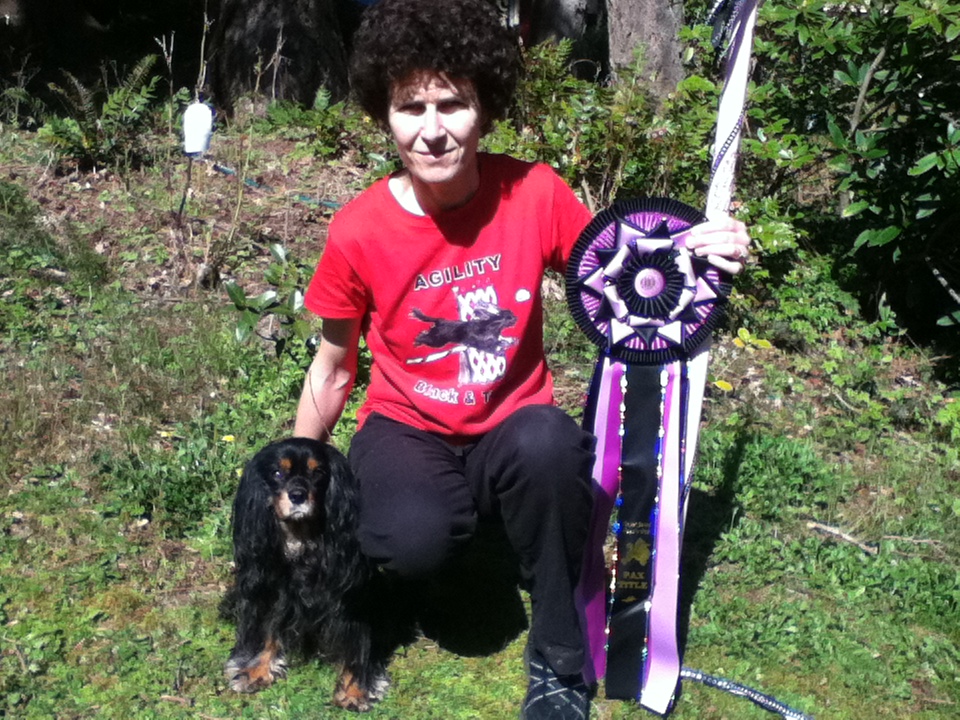
Maya and me with her PACH bar. I’m also wearing a black and tan agility Cavalier tee-shirt with her image on it. The shirt was not created by me. Someone else found that image online and created the shirts.


PACH

Maya’s last AKC certificate for agility.


In May 2011 Maya went back to Dr Woodfield for another checkup, where more progression of the disease was seen and her medication increased again and Vetmedin added. Maya ran her last ever AKC trial in Sequim in June 2011. It was very hot for June so she just did the first run and had her rest in the cool car, even though she ran like the wind. Later in June I brought her to our local vet as she seemed especially fatigued with more frequent coughing and the x-ray showed pulmonary edema.


Results from Maya’s last agility trial. She beat all dogs in the 8″ and 12″ classes that day.


We seemed to bring the edema under control with increased Furosemide and Maya tried to do what was meant to be her retirement run in USDAA in early July. I could tell after the first few jumps she was having trouble maintaining speed and then she stopped on top of the A-Frame and gasped for air. I pulled her straight off the course and decided we’d enjoy full retirement after that. By early August we were finding her energy level varied day to day and sometimes her breathing was quite labored. One night her breathing was very labored and she was very restless. This was not completely unexpected as she’d grown increasingly uncomfortable at night over the last few months, often shifting many times during the night. Also in the evenings when we all usually relaxed together she found it uncomfortable sitting on the couch and went off to find a cool piece of floor by herself. By this time it had been years since she wanted to sit in someone’s lap.


In the morning she seemed a little better but by the time we got home from work Maya was breathing at about 70 breaths per minute. Her walking was slow and weak and I knew we had to go the emergency vet. I had hoped through careful management of medication we’d be able to keep her comfortable despite progressive and irreversible heart damage and that no “heroic measures” would be needed. However, when I saw how much better Maya was on oxygen we proceeded with the intravenous Furosemide. Two mornings after the incident she was ready to come home, much weaker than before but with increased verve and spirit as if she knew there was another chance. I realized that in my efficiency to get the weekly pills and supplements measured out that I’d forgotten to include the Furosemide for the 2.5 days leading up to the emergency. Apart from feeling rotten about my mistake it also made us feel that there was hope with increased meds and Spirnolactone was added to the mix.


Maya’s medication list documented for everyone in the family to make sure we had it correct.


A real cough set in this time with the extreme heart enlargement and pressure on the trachea but Maya couldn’t cough as hard as before. We added Hydrocone for the cough but I’m not sure it ever made too much difference. And to my mind her breathing never really returned to its pre-emergency state. In the last 6 weeks with increased medication Maya enjoyed wandering in the garden occasionally and wanted to be more interactive than before, although as Dr Woodfield warned the brief summer heat caused fatigue. She battled a urinary infection and struggled with stabilizing her breathing such that we successively upped her diuretics, but still managed to maintain them on a twice daily schedule. I worried constantly about her breathing and brought her into work when it seemed bad to make sure I’d be there if she started suffering.


Maya resting in bed in mid-August 2011. Sometimes she let me get a spot too.


We had stopped the Prednisone after the emergency but had to reintroduce it as she was being driven crazy with scratching. The Prednisone also seemed to help the coughing after the initial bad morning burst but I’m sure wasn’t helping her heart. She also became very demanding barking at the fridge for treats and wanting to get involved in puppy tussles just like the old days, which made her cough and gag. I even caught her chasing a bird and then lunging and barking at the other dogs coming in from the potty spot to show them who was boss, just like the old days, except it wasn’t the old days anymore.


In the last 2 weeks I was in contact with our vet Dr Rice or at the vet several times culminating with a visit to confirm the pulmonary edema I was hearing. We decided the diuretics needed to go up to 3 times a day so I brought Maya back to work. Between that last visit and the next morning we had given her another 20 mg of Furosemide making the 4th dose that day to try and dry everything out, but she continued to struggle and wheeze with every breath.  When Maya screamed in pain the following morning along with her regular coughing fit, Jim and I felt we had reached the end of our capabilities to keep Maya comfortable at home. Faced with another visit to hospital, time in an oxygen chamber, an opinion from Dr Woodfield that it may not help, and medication that no longer seemed to help enough we made the difficult decision to say goodbye on September 16, 2011. Maya was 9 years and 2.5 months old.


Thankfully the end was very peaceful for all of us. Maya happily munched on cheese. Her fur was really soft and fragrant as we’d washed her the night before, not expecting this to be the day. She looked so gentle and beautiful as we walked out the door wanting to keep the memory of how she looked forever in our minds.


Maya chewing

A photo of Maya from 2006 with her favorite chew treat that she enjoyed her whole life. This photo shows her wonderful soft coat.


Dog Ticks: Recognize the Lyme Disease Symptoms in Dogs

Can you recognize the Lyme Disease symptoms in dogs? Lyme Disease in puppies is dangerous and at times life threatening. If you have a dog that frequently goes outside where it can pick up deer ticks, you need to recognize the conditions to get your dog treatment as soon as possible.


Lyme Disease Symptoms in Dogs


Lyme Disease symptoms in dogs come in two phases – early and late. In the early phase, before your dog is even diagnosed, you’ll note a number of or all these symptoms:


Muscle and Joint Pain – Lyme Disease usually causes lameness due to muscle and joint tenderness. Your dog may have many of the same symptoms as arthritis and have enlargement in the joints. You’ll notice this because your dog will have difficulty walking, walk laboriously or not want to walk around much at all.


Enlarged Lymph Nodes – If your dog is limping and showing pain when it moves or walks, check the lymph nodes to see if they are swollen. Lymph nodes are little glands that assist the immune system function. Check for the lymph nodes in your dog’s neck and the joint of their legs (similar to the armpits and groin in humans). If you feel swelling or enlargement this is a sign your dog has some type of infection, illness or possibly Lyme Disease.


Chills and Fever – Dogs can have fever and chills just like humans. Some dogs with Lyme Disease develop fevers anywhere from 103 to 105 degrees Fahrenheit.


Fatigue - You may notice your dog acting tired and sleeping a good deal more than usual.Lack of appetite – A sudden loss of appetite is another sign of Lyme Disease.


Depression - Lyme Disease affects the nervous system and can cause depression in dogs. Suddenly, your happy and playful dog is acting sad or wants to stay away from family members.Necessarily


Bad Breath – Breath with a strong ammonia-like smell is a good indication your dog has Lyme Disease.If your dog shows any of these signs or symptoms, you need to take him to the vet for a checkup. Bear in mind, your dog will ordinarily have a number of of these symptoms — not just one. And just because your dog has one or more of these symptoms doesn’t absolutely suggest your dog has Lyme Disease.


Your dog is valuable to you and is part of your family. To be absolutely sure whether your dog has Lyme Disease, you need to get a positive prognosis from your vetrinarian. Only then can you begin therapy for your dog to put a stop to long-term injury or even death. Familiarize yourself with these Lyme Disease symptoms in dogs and be able to know them to keep your dog out of harm’s way.


Dog Distemper Symptoms


dog distemper symptoms

Canine distemper virus (CDV) is an airborne type and highly contagious viral disease that is often fatal and can affects the respiratory, urogenital, gastrointestinal, optic nerves and central nervous systems.
Canine distemper is closely related to measles in human so if human has vaccine and immune to measles then they will also has immune to dog distemper. However there is a report that humans can possibly be infected with dog distemper disease but will show no signs or symptoms at all.
Large number of animal species and weasel-like animals such as lion, ferrets, foxes, wolves, coyotes, skunks, wild hogs, badgers, raccoons, pandas etc. can also develop this type of diseases. Dog distemper cannot affect or pass on to cat except other problems like skin irritations, mange, fleas, etc. Cat distemper is known as feline panleukopenia.
Puppies between 3-6 month of age are most susceptible to diseases infection and may suffer from more serious illness conditions such as inflammatory illness of the lung (pneumonia) and acute inflammation of the brain (encephalitis) when compare with older dogs. Around 15 percent of canine inflammatory central nervous system diseases are caused by canine distemper virus (CDV).
Nursing puppies has lower chance of CDV infection because a certain degree of immunity is passed down to puppies by colostrum-milk but this can only be done by giving colostrum-milk during the first 8-24 hours after birth.
Older dogs has little or no opportunity to become infected or exposed to the CDV virus because of the immunity build up but however there is a case that 7-8 years old dog has been infected with distemper.
Seasons has direct effects on the spread of dog distemper virus. Summer season and warm weather can force CDV to become dormantand lower their prevalence rate while CDV can be most virulent during early spring, fall and winter season.
Dog distemper incubation period ranges from 3-21 days in approximation and may be longer depend on other factors such as seasons, temperature etc.


Dog distemper symptoms

Early signs and symptoms of dog distemper


  • fever

  • loss of appetite (anorexia)

  • mild eye inflammation (usually last two day)

  • temperature rise to above 103 degree fahrenheit

  • depression

  • nasal discharge

  • discharge from eye (conjunctivitis)


Dogs will have following symptoms when CDV affects theintestinal tract.


  • vomiting

  • diarrhea

  • loss of appetite

  • suddenly weak

  • lethargy


Dogs will have following symptoms when CDV affects the lungs and upper respiratory tract.


  • coughing

  • sneezing

  • vomiting

  • green discharge from nostril

  • discharge eye (conjunctivitis)

  • diarrhea

  • cough and labored breathing (pneumonia)

  • runny nose (rhinitis)

  • fever (usually unnoticed)


Dogs will have following symptoms when CDV affects the brain and spinal cord (encephalomyelitis), secondary bacterial infections.


  • seizures

  • muscle incoordination (ataxia)

  • uncontrollable muscle twitch (myoclonus)

  • hard pad disease

  • depression

  • abnormal increase in sensitivity to stimuli of the senses including hearing, tasting, feeling sense (hyperesthesia)

  • partial or incomplete paralysis (paresis)

  • deterioration of mental abilities


2013年9月27日星期五

Our History


Our History


Beginnings 


The connection began with Gabe.


Nearly two decades ago, Licensed Social Worker Rick Yount received an unexpected Christmas present from two friends who were veterans of Operation Desert Storm: Gabe, an eight week-old Golden Retriever puppy.


A year later, Gabe accompanied Rick to work – the same day he transported an 11 year-old-boy from his biological mother into foster care. Rick found that during this most traumatic of times Gabe instinctively knew how to soothe the devastated child, and a seed was planted. Gabe became a certified therapy dog, and continued to work his magic on a daily basis.


The Warrior Connection


 When our troops began arriving home from the Iran and Afghanistan conflicts with serious physical wounds and mental trauma, Rick became convinced that dogs could play a pivotal role in their healing.


In July 2008, Rick created the first Warrior dog-training program to provide a safe, effective, non-pharmaceutical intervention to help treat the symptoms of post-traumatic stress (PTS) and traumatic brain injury (TBI). The program, based at the Palo Alto VA’s Men’s Trauma Recovery Program in Menlo Park, CA evolved into a highly respected intervention. To date, hundreds of Service Members and Veterans suffering from symptoms of combat stress have participated.


 The Program Expands


 Gabe photo for About Our HistoryRick was asked in 2009 to establish the Warrior dog-training program at Walter Reed Army Medical Center’s Warrior Transition Brigade (WTB) in Washington, D.C. In October of 2010, he and the program were invited to be part of the PTSD and TBI research, treatment, and education mission at the new National Intrepid Center of Excellence (NICoE), in Bethesda, MD – located at what is now the Walter Reed National Military Medical Center.


In 2011, Warrior Canine Connection was founded to expand the availability of this therapeutic service dog-training program to DoD and VA medical treatment facilities throughout the country, and to conduct research to establish this model as an evidence-based therapy for PTS and TBI. Read more about this research here.


Timeline:


1996   Licensed Social Worker Rick Yount begins working with his first Certified Therapy Dog, Gabe


2008   The first Warrior dog-training program to help treat the symptoms of Post Traumatic Stress (PTS) and Traumatic Brain Injury (TBI) is created in Palo Alto, CA


2009   The program is established at Walter Reed Army Medical Center’s Warrior Transition Brigade (WTB) in Washington, D.C.


2010   The program becomes part of the National Intrepid Center of Excellence (NICoE), in Bethesda, MD


2011   Warrior Canine Connection is created


canine mental illness | No Dog About It Blog


Archive


Posts Tagged ‘canine mental illness’


Is your dog mentally ill? Maybe.


August 21, 2012 10 comments


Dog Health


My friend Hilary shared this link a while back (The Signs of Mental Illness in Dogs) and I thought it was worth sharing. It’s a piece highlighting a new textbook on canine mental illness and some of the mental illnesses being found in our furry friends.


Reports like these always interest me because they provide insight into a dog’s mind and behavior. They also allow me to be more aware and better educated about dogs in general.


As dog owners, I think we most often attribute dog behavior to the dog or the owner (i.e.,  “bad dog” or “bad owner”), but as this piece demonstrates, sometimes the behavior can be mental illness. I have known some dogs who have suffered a mental illness, I just never realized that so many different types exist.


Among the many illnesses described by the author, Diane Garrod, are:


Schizophrenia


Depression


Unprovoked acts of aggression


Obsessive Compulsive Disorder (OCD)


Separation Anxiety or Panic Disorder


Extreme fear


Neurological diseases and disorders


Symptoms vary, but among the ones mentioned are:


Appetite suppression


Aggressive behavior


Increase or decrease in water intake


Stress Hair loss


Fatigue


Obsession


Accelerated hyperactivity


Garrod also references a new textbook by Dr. Franklin D. McMillan (the Director of Well-Being Studies at Best Friends Animal Society), titled “Mental Health and Well-being in Animals”. Although textbooks aren’t usually my favorite reading material, I have to admit that this one sounded interesting.


One of the statements on the publishing site caught my eye: “Recent research shows convincingly that an animal’s physical health and immune system function are strongly influenced by its mental state.” It makes sense doesn’t it? A dog that is mentally stressed is likely to show it in their physical being as well. A dog that is balanced and happy is less likely to show symptoms, but not always.


Understanding how a dog’s mental health can impact behavior is just as important as understanding how their physical health can impact behavior. I am so glad that now veterinarians and animal behaviorists will have one comprehensive place to find this information. In the end, it benefits us and our dogs.


Symptoms and Treatments For Dog Skin Diseases


Skin diseases on dogs are one of the most common health problems all dogs have. And, this can be a big headache for owners if these diseases are not treated properly and immediately. They will not only affect the appearance of your dog, but also create nuisance to the dog itself and also humans. There are several types of skin disease that are prone to happen to your dogs. Skin diseases might due to allergy, hygiene, weak immune system or attack from mites. Some of the symptoms can be easily detected especially when your dog experience itchiness at a particular area and keep on scratching it. Fool smell and hair loss are some of the other common symptoms. In this article, you can find out some of the common skin disease, each of the symptoms and general treatment methods. The skin diseases are categorized into 3 sub-categories: Flea Allergy Dermatitis, Immune-mediated Skin Disease and Infectious Skin Disease.


Flea Allergy Dermatitis is the allergy of dogs towards the saliva of fleas. The bite area will become slightly swollen and itchy. Your dog will tend to always scratch and bite on that area and resulting hair loss. Identify the problem due to flea by checking on the fur of your pet. If you can find lots of small black dots on the fur, those are the flea feces. Immediate treatment is to select flea repellent products with Etofenprox, Pyrethrin or Permethrin. They not only kill the fleas but also repel them. Bathe your dog regularly with flea repellant shampoo. Fleas tend to infest moist and shady areas. Clean and spray insecticide with Pyriproxyfen or Methoprene to your dog’ corner to kill of fleas and destroy their eggs and larva. Keep the infected dogs away from other. Repeat the above procedures until your dog is flea-free.

Immune-mediated Skin Diseases are maladies result from irregular activity of immune system. These diseases are not contagious. Canine Atopic Dermatitis which is caused by hypersensitive to certain allergens such as mites, dust, pollen, mold, certain types of food, weather and etc. Symptoms of the disease are itchiness especially around the eyes, abdomen and paws, hair loss and skin darkening. Identify the allergen and keep away it from your dog. Steroids, fatty acid ailments (fish oil) and anti-bacteria shampoo can be used to relieve the itchiness. Canine Follicular Dysplasia is a genetic disease that causes the dog to lose hair. Parts on the neck area, back, hind legs and tails are placed this symptoms normally appear. Treatment for this disease is rarely successful. It happens to a dog when it is around 2-4 years old.


Infectious Skin Diseases are some of the more worrisome maladies. They are contagious to both your dogs and you. Commonly know infectious skin diseases are caused by mites which are called Manges. Depending on the types of mites, there are 3 types of them: Demodectic Mange, Sarcoptic Mange and Cheyletiella Mange (dandruff symptom). Symptoms for Manges are itchiness, sore and hair loss. Initial control by using anti-bacterial shampoo and anti-itch shampoo will help. However, it is recommended to bring your dogs to veterinarian once the above symptoms appear because they may have been infected by more severe Sarcoptic Mange.


Visit AllDogsRHere.com to know more treatments and preventing of skin disease, and other types of diseases such as Fungal Skin Disease.
Article Source: http://EzineArticles.com/1588588